How to Style a Small UK Living Room for Cosy Evenings
British living rooms tend to be compact, multi-purpose and, by six o’clock on a winter evening, slightly dark. That is not a problem to solve so much as a mood to lean into. With the right lighting, a few soft textiles and a layout that leaves room to breathe, a small sitting room can feel warmer, calmer and more generous than its square metres suggest. The trick is to plan for how the room feels after dark, not just how it looks at midday.
Lighting: build warmth in layers
The quickest way to make a small living room feel cold is to rely on one bright ceiling light. It flattens colour, casts hard shadows and makes the room feel smaller because it lights every corner at once. Start your evening by switching it off. Then build three layers of light instead:
- Ambient light: a floor lamp or wall lights to wash the room in a soft glow.
- Task light: a table lamp beside the sofa or your favourite chair for reading, knitting or scrolling.
- Accent light: a small lamp on a shelf, a candle or a string of warm fairy lights along a mantel.
Choose warm white bulbs, usually around 2700K, and dim them if you can. A plug-in dimmer or a smart bulb is a simple fix if you rent and cannot change the wiring. Fabric lampshades diffuse light beautifully; a bare bulb or a cold white LED will undo the effect. Place lamps at different heights and in corners. Light that bounces off walls and ceilings feels softer than light aimed straight at you. Candles are lovely, but never leave them burning unattended, especially near curtains or throws.
Textiles: softness you can see and feel
In a small room, texture matters more than pattern. A wool throw, a velvet cushion and a linen curtain add depth without adding visual noise. Choose two or three materials you like and repeat them around the room so it feels considered rather than cluttered.
Curtains and rugs
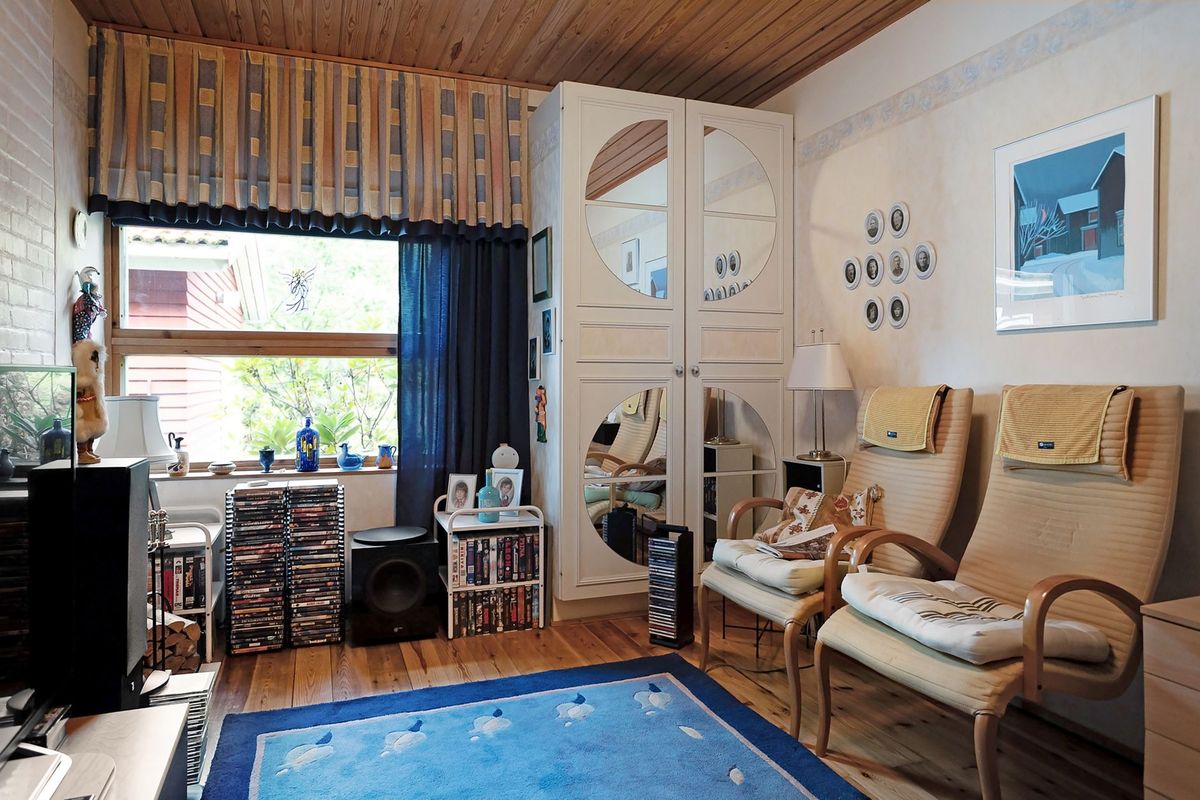
Hang curtains as close to the ceiling as you can and let them fall to the floor, even if the window is small. The extra length draws the eye upwards and makes the ceiling feel higher. Thermal or interlined curtains also keep draughts out, which matters on chilly evenings. For the floor, pick a rug that is large enough to sit under the front feet of your sofa and chairs. A tiny rug floating in the middle of the room can make the space feel disjointed; a generous one pulls the seating area together.
Cushions and throws
Mix cushion sizes and shapes rather than lining up identical squares. A large square behind a smaller rectangular cushion gives a sofa a relaxed, lived-in look. Keep a throw folded over the arm or back of the sofa so it is easy to reach when the temperature drops. If you have a blanket box or ottoman, use it for spare throws and cushions so the room stays calm when you are not using them.
Layout: make the room work after dark
Small rooms often end up with furniture pushed against every wall, which creates a corridor down the middle and leaves nowhere to settle. Instead, think about the conversation zone. Pull the sofa away from the wall if you can spare a few centimetres, and angle a chair towards it rather than leaving it parallel. A pair of chairs facing a sofa, with a small side table between them, can feel more intimate than a single large suite.
Keep the flow clear
Leave a clear path to the door, the window and the radiator. In UK homes, radiators are often under the main window, so avoid blocking them with a sofa or a heavy curtain if you want the room to heat properly. If your TV is the focal point, keep it at a comfortable eye level when you are seated, not high on the wall. Use paper templates or masking tape to try a new arrangement before you move anything heavy. A layout that works in daylight may feel different once the lamps are on, so test it in the evening.
Storage: keep the calm without hiding everything
Cosy does not mean cluttered. A small living room feels more restful when surfaces are mostly clear, but storage has to be easy or it will not last. Look for furniture that earns its place: an ottoman with a lift-up lid, a slim console behind the sofa, a basket beside the armchair for magazines. In period homes, alcoves either side of a chimney breast are ideal for narrow shelves or built-in cupboards. If you rent, freestanding alcove units or stackable boxes can do the same job without drilling.
- Use one tray for remotes, coasters and candles so small items have a home.
- Choose baskets and boxes in similar tones to stop open shelving looking busy.
- Keep cables out of sight with clips, sleeves or a lidded box.
- Store off-season throws and cushions under the sofa or in a blanket box.
Try not to fill every shelf. Leaving some empty space gives the eye a rest and makes the room feel larger. Rotate ornaments and books rather than displaying everything at once.
Colour, scent and finishing touches
Warm colours tend to flatter lamplight. Think clay, ochre, olive, rust, biscuit and soft charcoal rather than icy grey or brilliant white. Deep colours can make a small room feel enveloping, but they need more light, so balance a dark wall with lighter textiles and at least two lamps. If you want to keep the walls pale, add warmth through wood, brass, terracotta and woven textures.
A mirror opposite a window or lamp can bounce light around the room, but do not treat it as a magic fix; it works best when it reflects something worth seeing. Hang art at eye level, not near the ceiling. A plant or two adds life, and a favourite print or photograph gives the room personality. Scent is part of the atmosphere: a candle, a reed diffuser or a simmer pot of orange peel and cinnamon can make a small room feel instantly welcoming. Keep flames away from fabrics and never leave them unattended.
A five-minute evening reset
You do not need a full redesign to enjoy a cosier evening. A short routine can change how the room feels before you settle down.
- Switch off the main ceiling light.
- Turn on two or three lamps at different heights.
- Close the curtains and straighten the throw over the sofa.
- Clear the coffee table of anything that does not belong there.
- Light a candle or add a few drops of essential oil to a diffuser, if you use one.
Then sit down and notice the difference. A small living room can be one of the warmest rooms in the house when the lighting is soft, the seating is close enough for conversation and the clutter is tucked away. Start with one change tonight, and build from there.
Photo: Alex Tyson / Pexels

You Might Also Like
Carpet, laminate, vinyl and engineered wood compared on durability, cost and maintenance — with practical advice on which flooring works best in each room of a busy family home.
A practical beginner's guide to transforming second-hand furniture: how to choose a solid piece, prep it properly, paint in thin coats, and seal it for a durable finish.